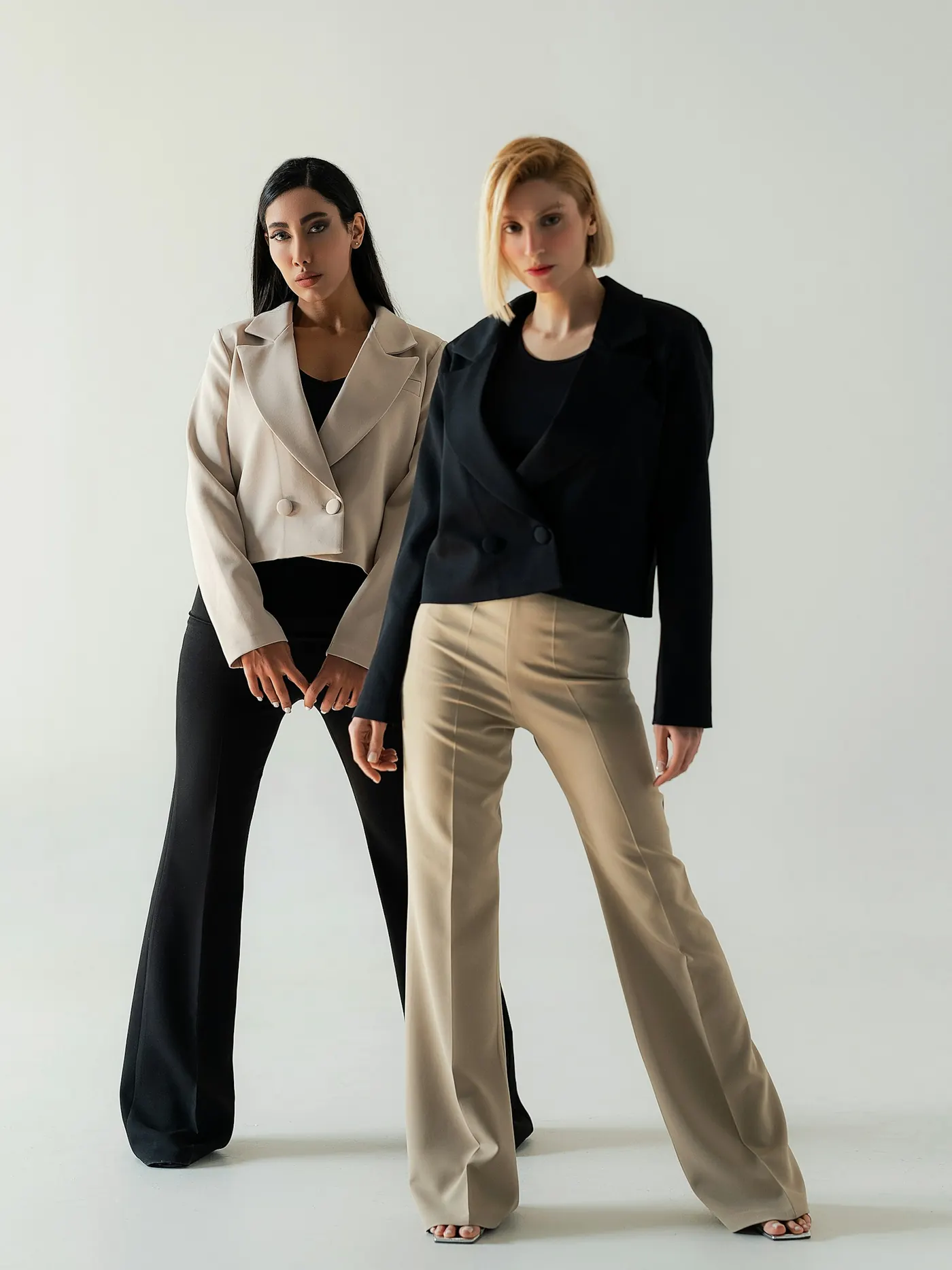
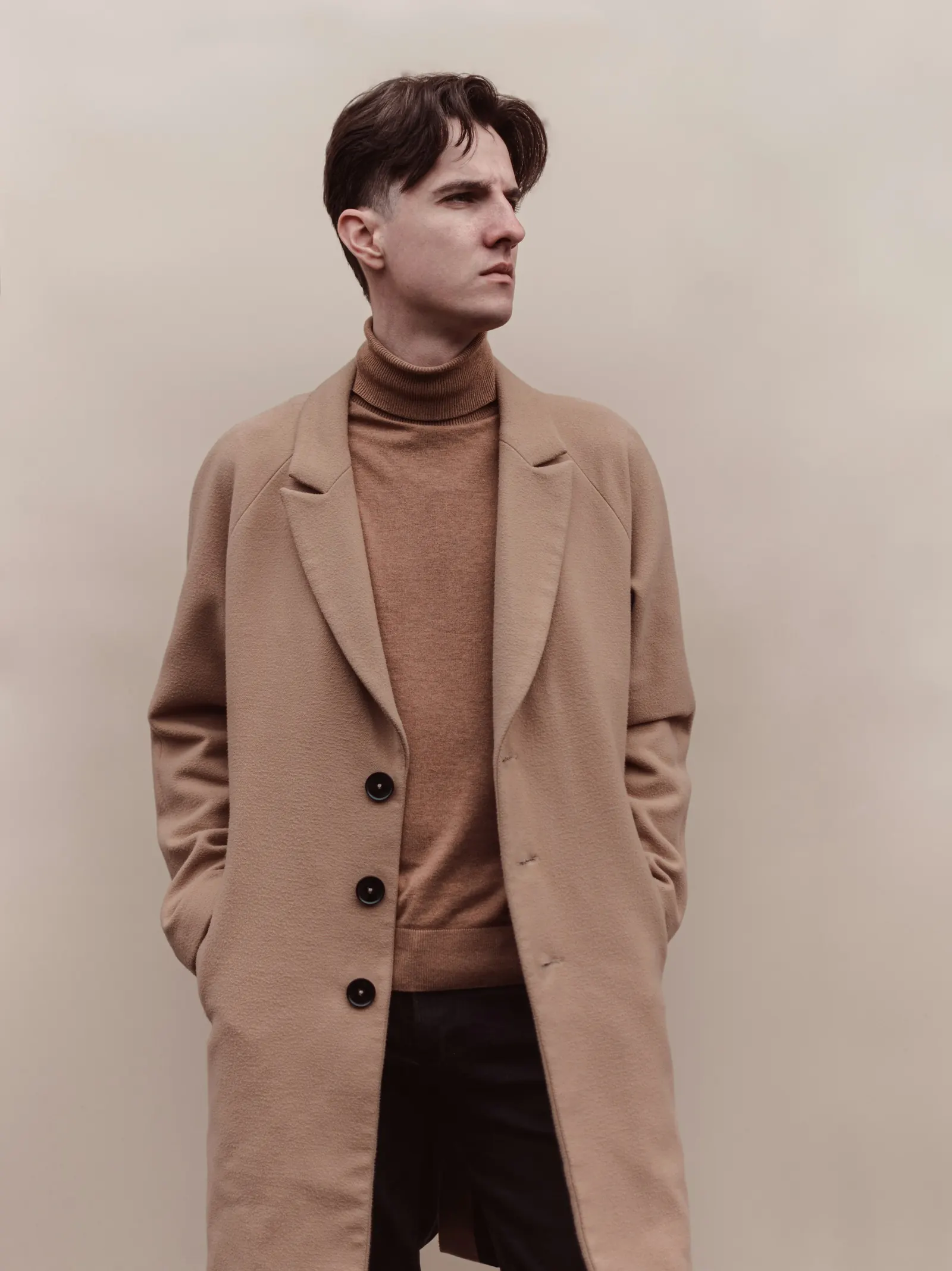
Cut in Baku, sewn in Baku
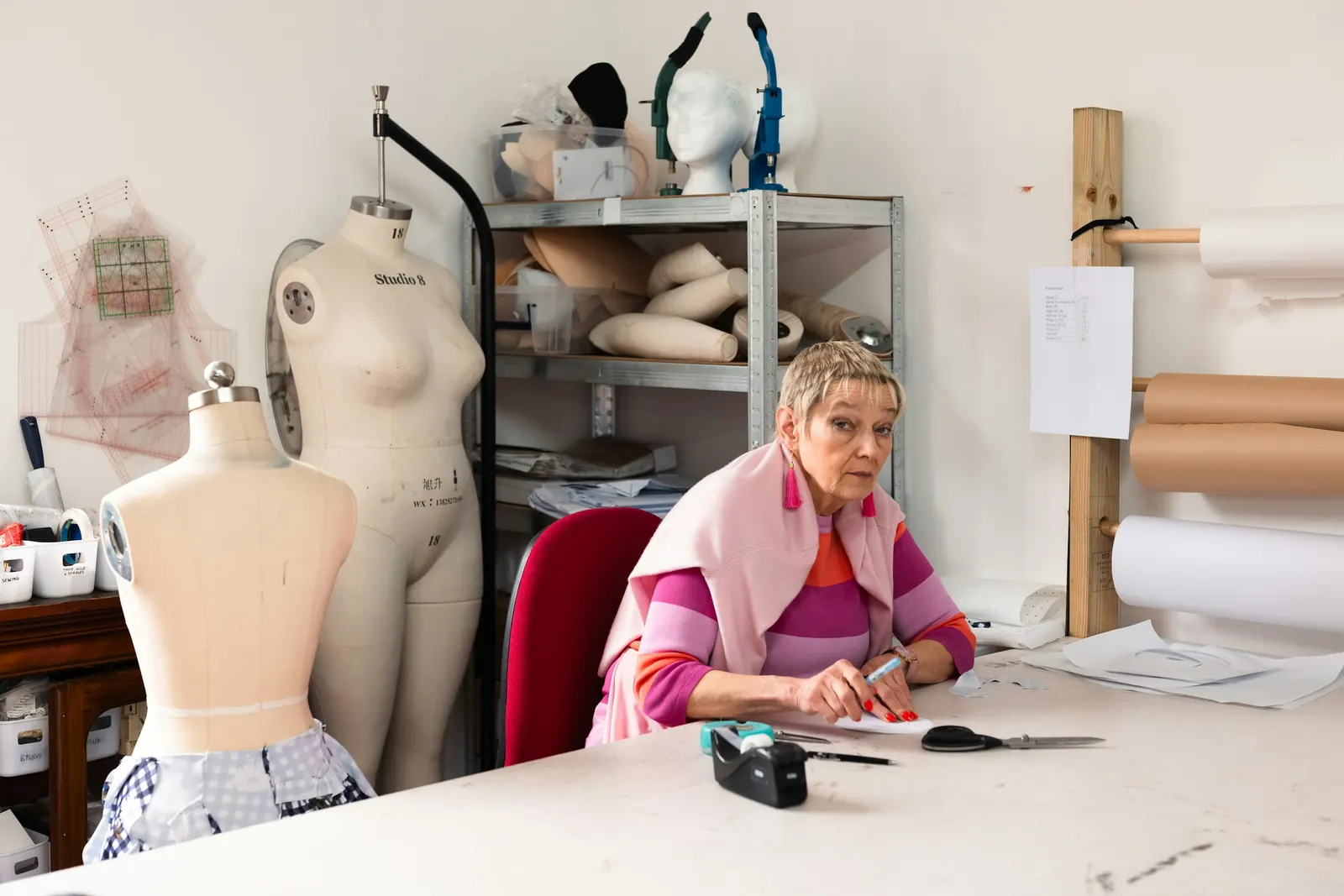
The designer Aytaj Malikova started ÜLGÜ in 2015 with two sewing machines. Today 16 people work in the workshop, and every piece is made one wall away from the boutique.
Why “ülgü”
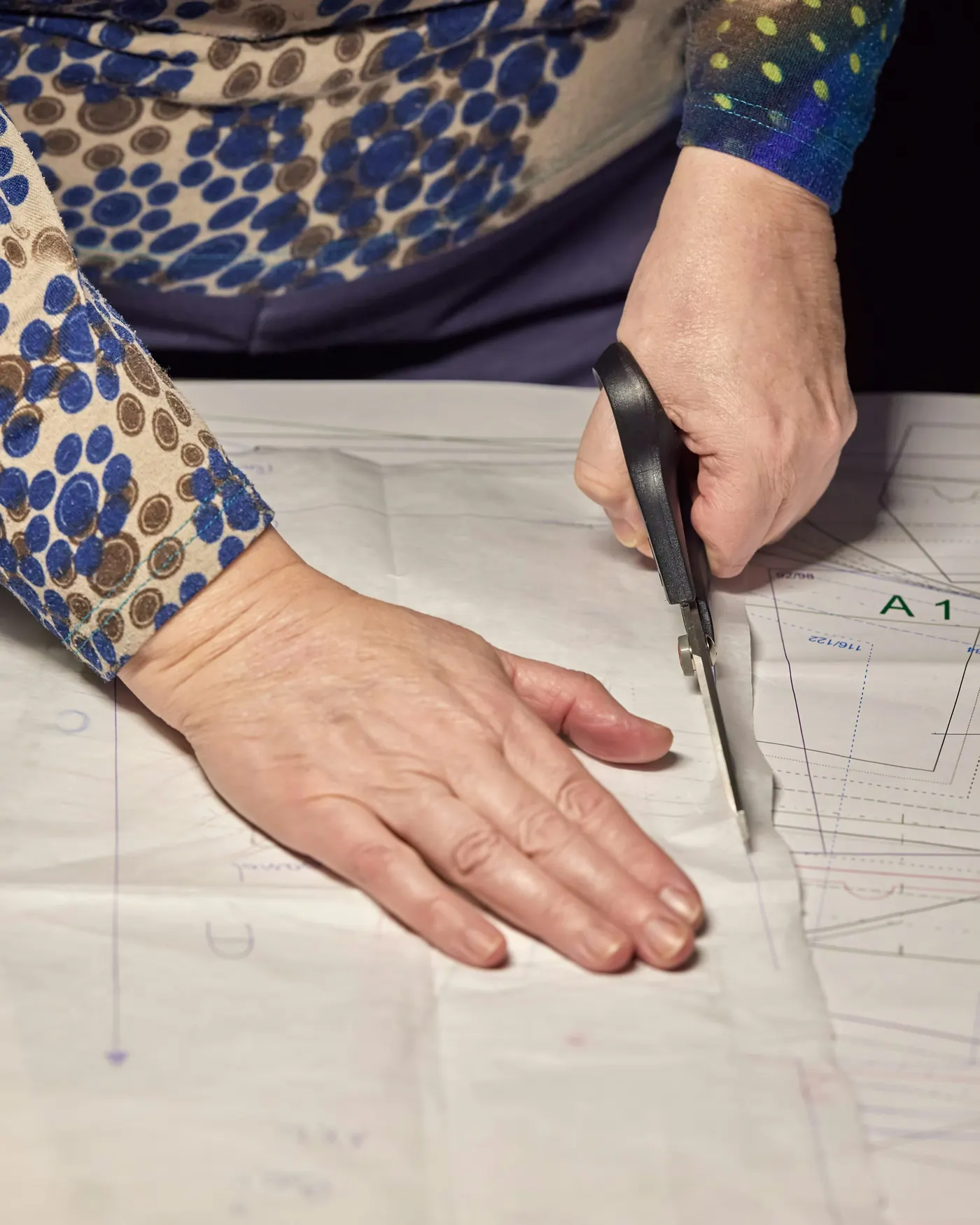
An ülgü is a tailor’s paper pattern: before scissors touch the cloth, every piece exists on paper. We chose the name because for us clothing starts from the pattern, not the sketch. A coat that sits well is a pattern drawn well.
We make 40–120 pieces of each style. When the cloth runs out, so does the style. That is why no mountain of stock is left at the end of a season, and why the sale holds only last sizes.
With the workshop in the same building as the boutique, an alteration takes one conversation: we measure the hem of the trousers or the sleeve of the coat, and it is ready in two working days.
Eleven years
- 2015
- Aytaj Malikova starts making coats to order with two machines in a 28 m² room in Yasamal.
- 2018
- The first ready-to-wear collection: 12 styles. The city-centre boutique opens on Rashid Behbudov Street.
- 2021
- The workshop moves to Atatürk Avenue in Narimanov; the workshop boutique opens beside it.
- 2023
- A menswear line and the online shop. We start knitting with a workshop in Sumgait.
- 2025
- 9,400 pieces are made in the year; 16 people work in the workshop.
A coat passes through four pairs of hands
A lined wool coat takes 11 hours of work. Each stage has its own table and its own person.
The pattern
3–4 weeks a style
The pattern cutter draws the style on paper, sews a sample in calico and tries it on three people. Then the pattern is graded to five sizes.
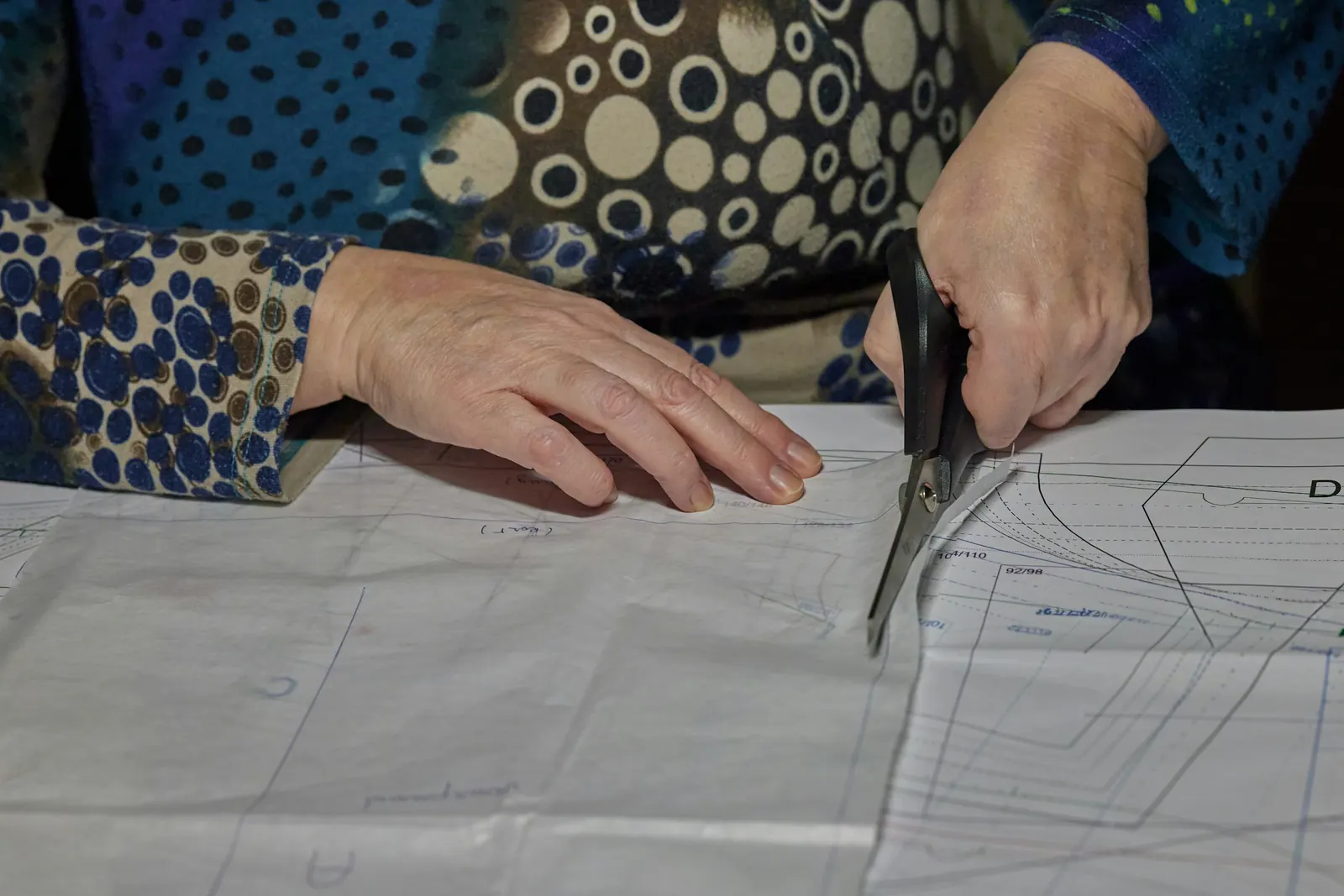
Cutting
1 hour 40 minutes
The cloth is steamed and left on the table overnight. A coat takes 2.9 metres of wool and 2.4 metres of lining; on a checked cloth the check is matched at the seams.
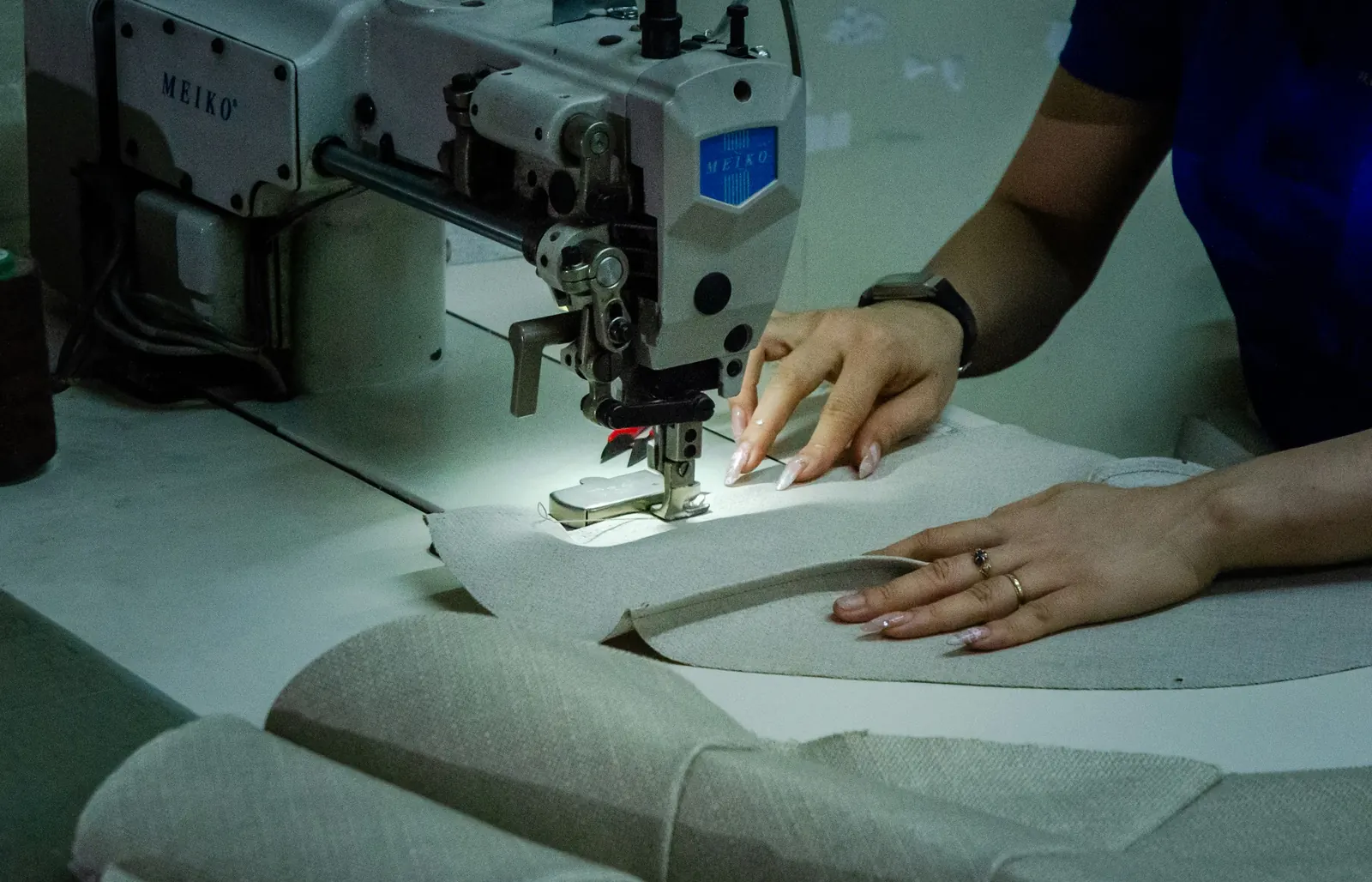
Sewing
7 hours
One seamstress sews a coat from start to finish and writes her initials on the label in the lining. The collar’s linen layer and the buttons are sewn by hand.
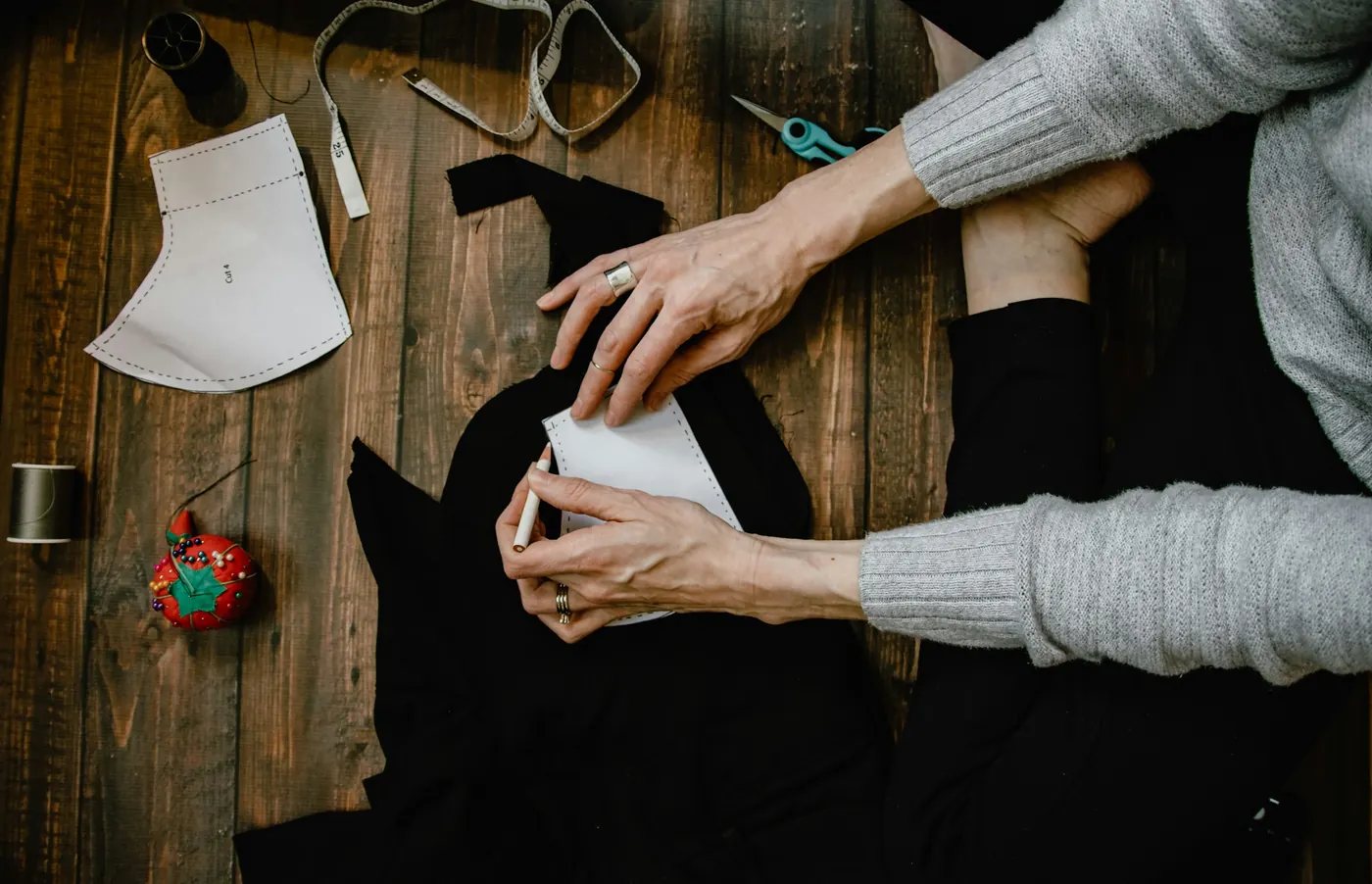
Pressing and checking
2 hours 20 minutes
The coat is shaped on a steam form. The checker goes through 14 points; a coat that fails goes back to the seamstress’s table.
Who works in the workshop
- 2 pattern cutters
- They draw the patterns and grade them to sizes. Rana Huseynova, the head pattern cutter, has been with us since 2016.
- 11 seamstresses
- Each sews her piece from start to finish; coats have their own seamstresses, shirts and dresses theirs.
- 3 people at pressing and checking
- No piece goes to a boutique without crossing their table.
Where the cloth comes from
- Wool and suiting cloth
- From mills in Italy and Turkey, twice a season. Every roll’s composition and weight is checked when it arrives.
- Knitwear
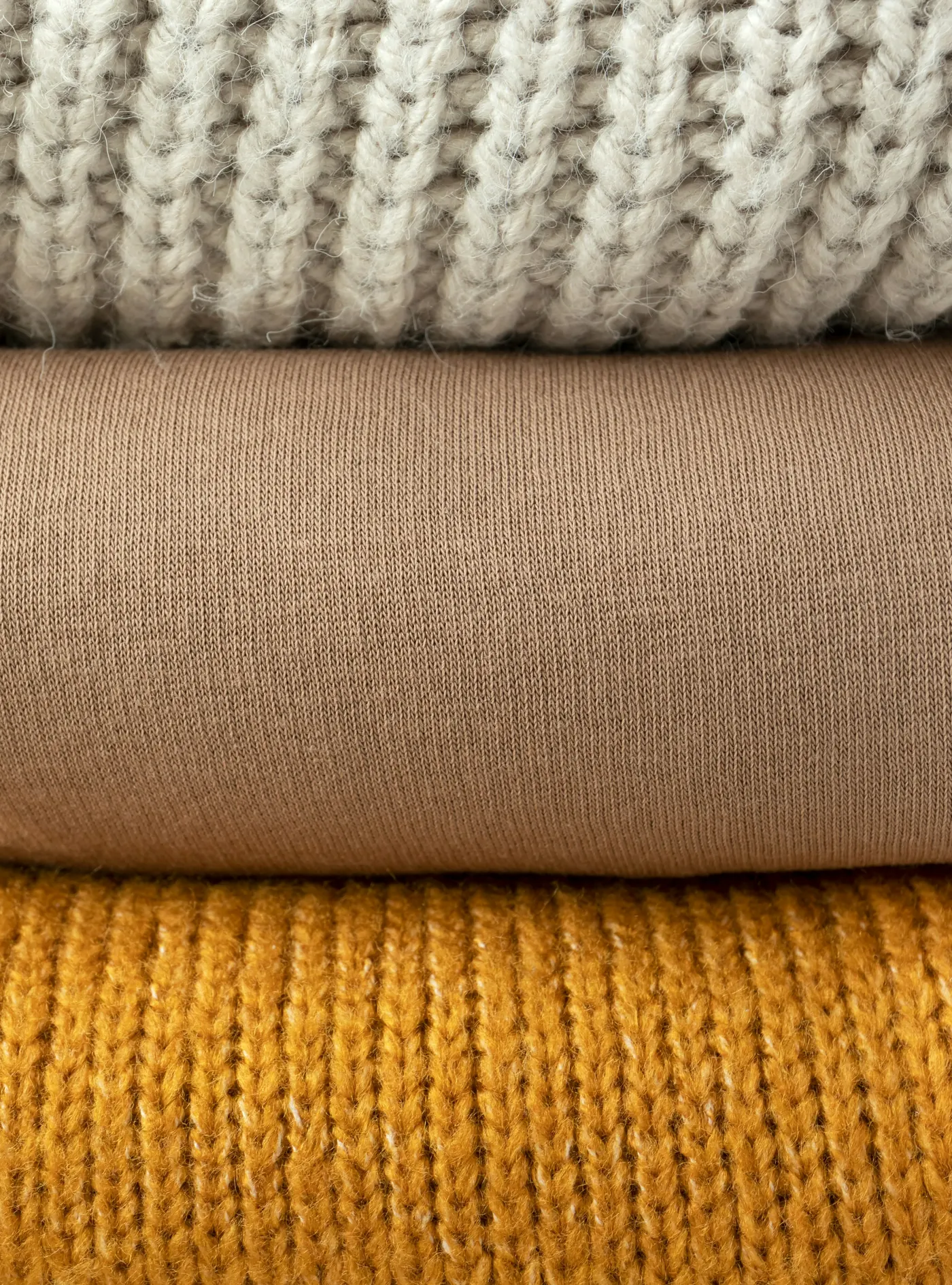
- We choose the yarn and a knitting workshop in Sumgait knits it. The mohair and alpaca yarns come from Peru and South Africa.
- Leather
- The bags and belts are made by a leather workshop in Baku, in vegetable-tanned calf leather.
- Linings and buttons
- The lining is viscose: unlike a synthetic lining, it breathes. Buttons are horn-coloured casein or metal.
See the workshop for yourself
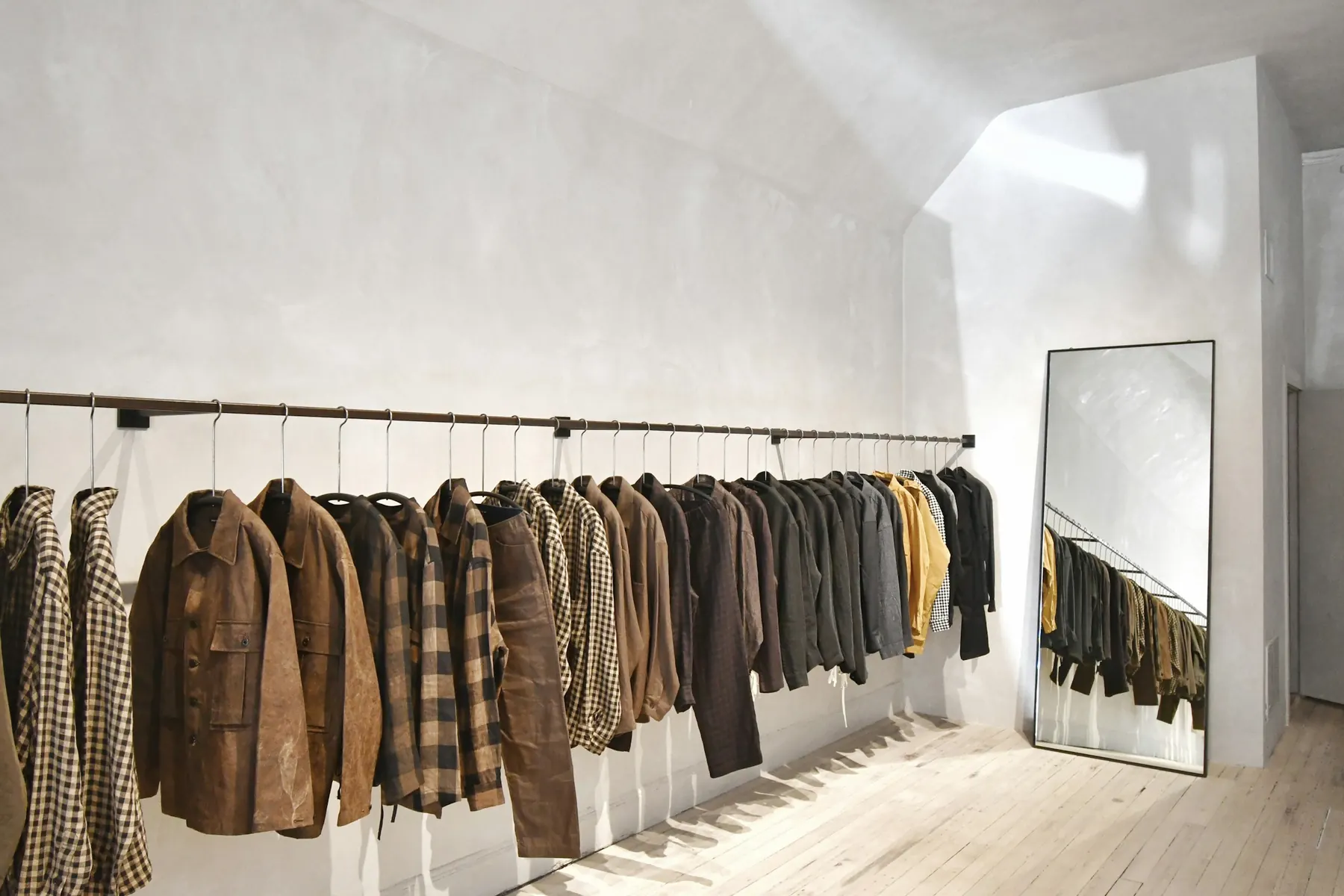
At the workshop boutique the cutting table shows through a glass wall. On Saturdays at 12:00 a pattern cutter shows visitors how a pattern is drawn; there is no need to book.