Quality and the lab
Every batch goes through two labs and leaves the plant only after a 7-day incubation test. Use the code on the cap to see your own bottle’s record.
Check a batch
The code is printed on the cap of a bottle or a jar, and on top of a carton next to the best-before date.
Sample codes:
- Q
- Plant: Q Quba, G Göyçay
- 2
- Line
- 261003
- Filling day: year, month, day
- 07
- Batch of the day
The result appears here: the plant and line, the filling day, the districts the fruit came from, the lab’s readings and the best-before date.
What the lab checks
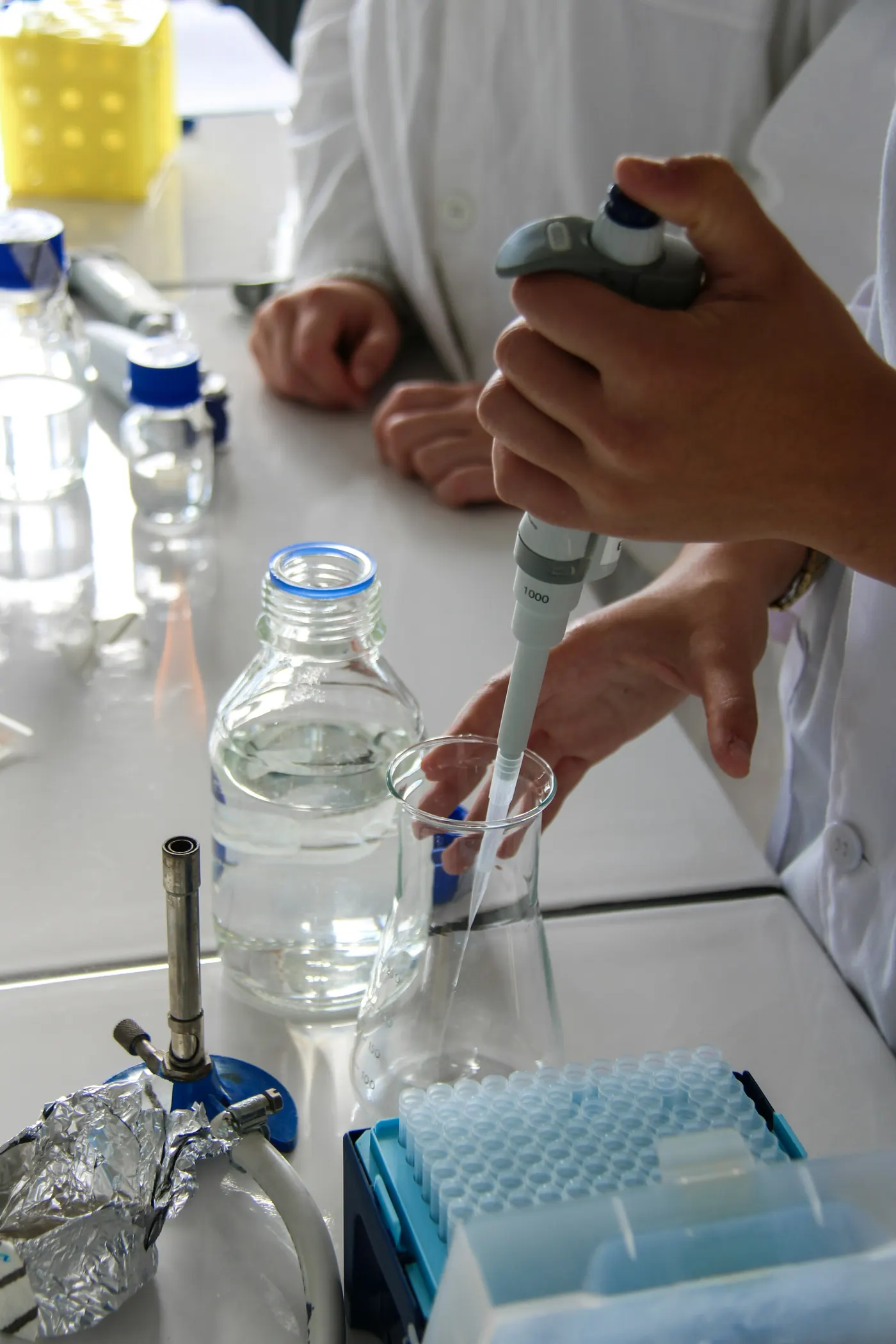
Nine lab staff work in shifts at the Quba plant and five at Göyçay. Every season we send samples to an accredited outside lab for pesticide residues and heavy metals.
When fruit arrives
- A sample from every truck: Brix, acidity and the share of rotten fruit (over 5% and the load is turned away)
- The orchard’s district and the grower’s name go on the batch card
- Samples from the season’s first loads for pesticide residues
During production
- Brix and acidity every hour
- Pasteurisation temperature and time are logged without a break; if they fall out of range the line stops itself
- A metal detector and a vacuum check of the cap on glass bottles
Before release
- Packs from every batch stand 7 days at 30 °C: if none swell or smell, the batch is released
- Microbiology and a tasting panel
- Two packs from every batch are kept for a month after the best-before date
For apple and sour cherry juices made from concentrate our limit is no lower than the EU minimum: 11.2 Brix for apple and 13.5 for sour cherry (Directive 2012/12/EU, Annex V).
Certificates
An accredited international body issues the certificates and audits us every year.
ISO 22000:2018
Food safety management system
Making and packing fruit juices, nectars, concentrate, preserves, jams and narsharab
- Number:
- FS-AZ-0418-22
- Issued:
- 14 May 2024
- Valid until:
- 13 May 2027
- Plants:
- Quba, Göyçay
FSSC 22000
A food safety scheme recognised by GFSI
Juices and nectars in aseptic cartons and glass; apple and sour cherry concentrate
- Number:
- FSSC-118204
- Issued:
- 3 March 2025
- Valid until:
- 2 March 2028
- Plants:
- Quba
HACCP
Hazard analysis and critical control points plan
14 critical control points: pasteurisation temperature and time, the metal detector, cap sealing, glass breakage control and more. The plan is reviewed every February.
- Number:
- HACCP-NQ-2026
- Last review:
- 10 February 2026
- Plants:
- Quba, Göyçay
EAC
Declarations of conformity with the Eurasian Economic Union’s technical regulations
Under TR CU 021/2011, 022/2011 and 023/2011: the juices and nectars shipped to Russia and Belarus. The importer registered in the Union registers each declaration; we send its number on request.
- Issued:
- 20 November 2025
- Valid until:
- 19 November 2030
- Plants:
- Quba, Göyçay
If something is wrong with a product
Report a problemKeep the pack and the code
Do not throw away what is left: the code on the cap and the shop receipt speed things up.
Tell us
Give the code, a photo and where you bought it in the form, or call the quality line.
The lab checks the same batch
We open and test the packs we kept from it within 2 working days.
An answer within 5 working days
If the fault is ours, we replace the product or refund it.
Recalled batches
No batch is being recalled now. If a batch fails a test, it is collected from distributors within 24 hours and announced here.
As of 11 October 2026.
The plants and how juice is made