· How-to · 4 min read
How to build a pallet our warehouse will accept
No higher than 160 cm, no heavier than 600 kg, at least 4 turns of stretch film. A pallet outside these limits is priced off the tariff.
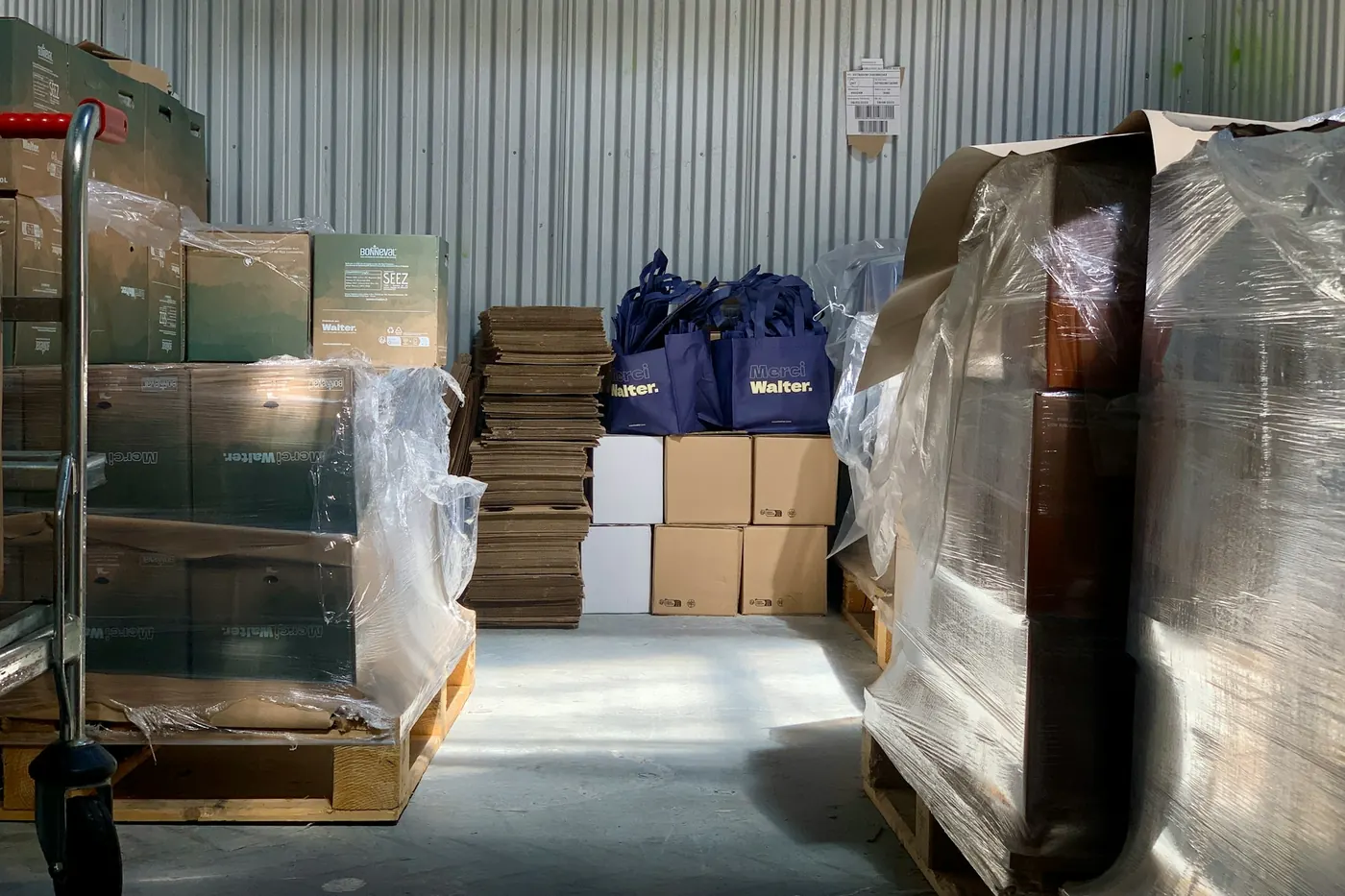
A pallet within the limits travels on the domestic tariff at a fixed price: ₼35, ₼55 or ₼70, depending on the zone. It does not have to be restacked at sorting and leaves the same evening. What follows is what the clerk at the branch checks.
Size and weight
- A euro pallet: 120 × 80 cm. A base of any other size is charged by volume.
- No more than 160 cm high, pallet included.
- No more than 600 kg.
- No carton may overhang the pallet: a corner that sticks out is crushed against the next pallet.
How to stack
- Heavy cartons at the bottom, light ones on top.
- Lay the cartons like bricks, so that the joints of one layer do not sit over those of the next.
- Keep the top flat: nothing can be put on a pallet stacked as a pyramid.
- Put cardboard edge protectors on the four corners so the stretch film does not crush the cartons.
How to secure
- At least 4 turns of stretch film; the first turns must grip the pallet itself.
- A pallet over 300 kg also gets two straps.
- Stick a sheet with the receiver’s city and phone number on two adjacent sides.
When a pallet is outside the limits
A pallet over 160 cm high or 600 kg does not travel at the fixed price: it is charged on the ordinary tariff by weight or by volume (1 m³ counts as 250 kg). A leaning pallet is restacked and wrapped at the branch for ₼4. The limits for storage are different: a pallet place in the warehouse takes up to 180 cm and 1,000 kg.