· 4-minute read
At what wind force work stops
Absheron has plenty of windy days. Annex 2 of the Labour Code gives the limits for crane, welding and rig work in Beaufort force; here they are in metres per second.
Onshore
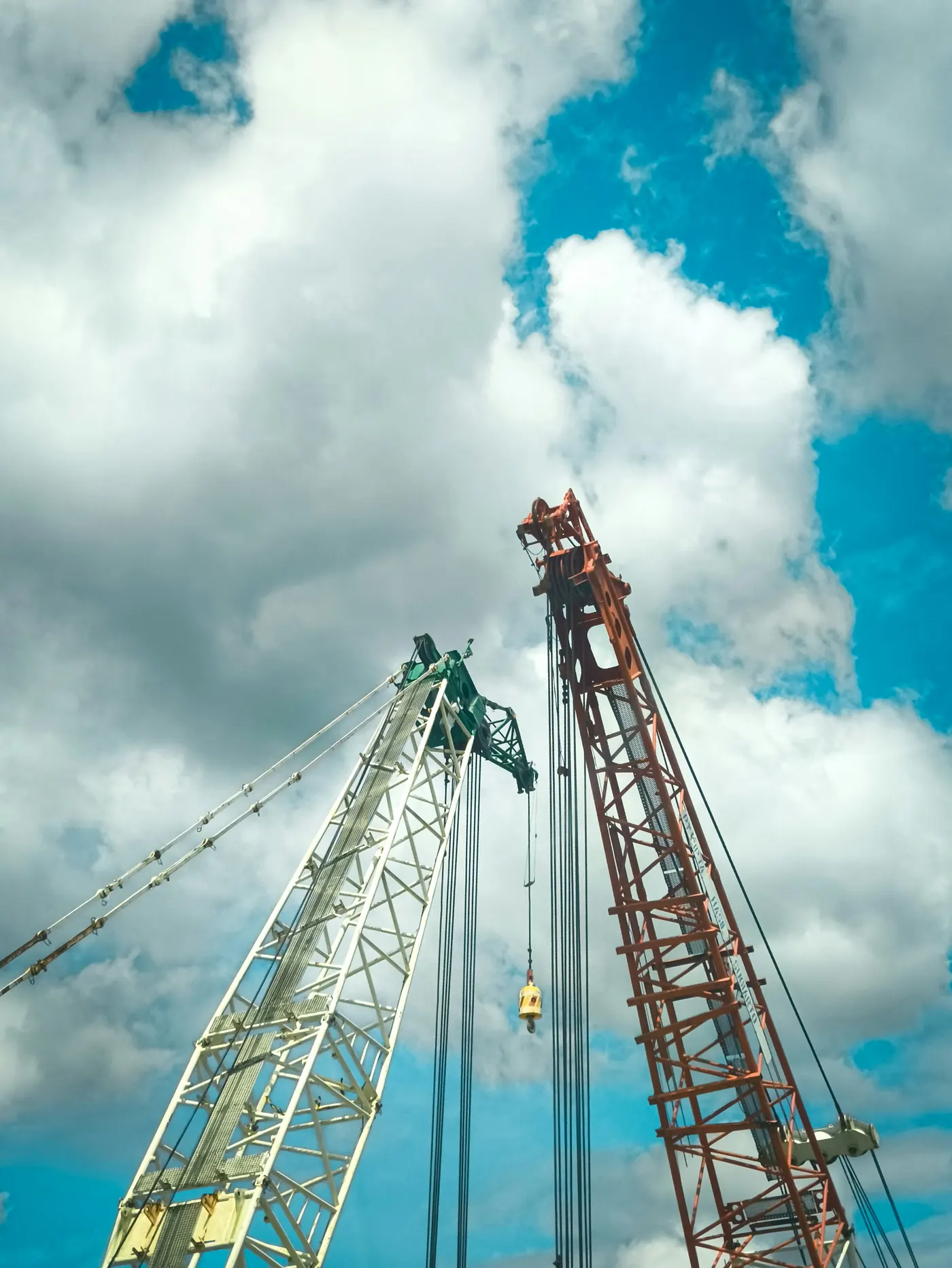
All crane work onshore stops at wind force 6 and above. Force 6 on the Beaufort scale is 10.8 to 13.8 m/s. Construction has lower limits: erecting a crane itself stops above force 2, installing hoists above force 3.
At sea
- Construction with crane vessels: above force 4 (above 5.5–7.9 m/s)
- Downhand welding: above force 4; vertical and overhead welding: above force 3
- Work on producing wells on fixed platforms: above force 6
- Tripping on a drilling well: above force 8 (17.2–20.7 m/s)
- All derrick work except well flushing: above force 10 (24.5–28.4 m/s)
Heat and cold
Above 41 °C, work stops outdoors and in buildings without cooling. At minus 10 °C or colder with wind above force 3, outdoor work stops or warming breaks are given.
The crane’s own limit
The crane maker gives its own wind limit in m/s in the load chart, and it is lower for loads with a large surface (panels, pipe bundles). We follow whichever of the two limits is lower and measure the wind with the anemometer on the boom head.
The details are as of the article’s date.
NextHSE: stop-work authority and the limitsMore articles

· 4-minute read
BOSIET, H2S and rigging certificates: who issues which
When an employer asks for "a certificate", it usually means a specific standard. Which ones only an OPITO-approved centre can issue, and which any training centre can.
· 5-minute read
14/14 and 28/28: rotation work under the Labour Code
The Code has no separate chapter on a "rotation method". Rotas are built on the summarised accounting of working time; articles as of October 2026.
· 4-minute read
H2S: why you cannot trust your nose
Hydrogen sulphide smells of rotten eggs in small amounts and stops smelling in dangerous ones. The figures come from the US institute NIOSH.